
McLeod County Criminal Court Records
A McLeod County criminal court record is the case-level file kept by the district court after a prosecution begins. It is broader than a charge listing. It can include the criminal complaint, charge lines, bail or bond orders, hearing entries, pleas, motions, dispositions, sentencing, probation violations, warrants, no-contact order entries, and financial obligations. For a closer look at the charge itself, use the local charge pathway in McLeod County arrest records and charges.
McLeod County criminal cases are filed in McLeod County District Court, part of Minnesota's First Judicial District. The district court has original jurisdiction in criminal cases filed in the county, while the McLeod County Attorney prosecutes criminal actions on behalf of the State of Minnesota. Minnesota does not use a county-level District Attorney title. Ryan Hansch is listed as McLeod County Attorney, and the office is in the courthouse campus with Court Administration.
The County Attorney page identifies the local prosecuting office and duties for criminal actions.
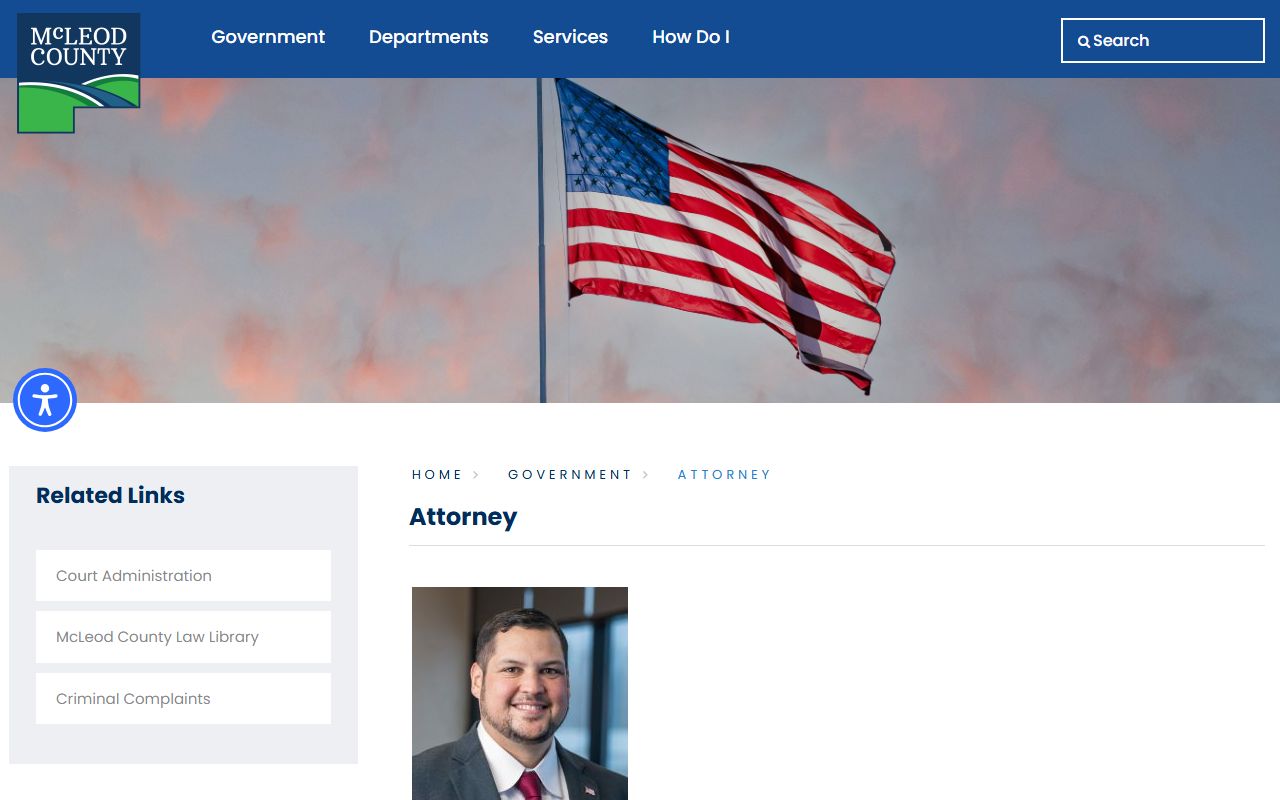
That office is not the court clerk, but its complaint records can help explain how a criminal case began.
Search McLeod County Criminal Cases
The main online search channel is MCRO Case Search, the Minnesota Judicial Branch portal for district court records. Search by defendant name, case number, citation number, attorney name, or attorney bar number. For criminal court records, case number is often best because MCRO limits pending criminal, traffic, and petty misdemeanor cases without conviction when searching by defendant name. A pending public case may appear by case number even when a name search does not return it.
- Open MCRO Case Search and accept the terms and conditions.
- Choose Name, Case Number, Citation Number, or Attorney based on the information available.
- Select Criminal under case category when that filter is available.
- Narrow Court Locations to McLeod County for local cases.
- Open the case detail and read the register of actions, hearings, charges, plea, disposition, and sentencing entries.
- Use Document Search by case number if public documents are available online.
- Request a certified copy from McLeod Court Administration when the record must be official.
MCRO is not a complete background-check system, and its records are not certified. The research notes that the BCA is the background-check channel referenced in MCRO terms, while MCRO is for public court records. For federal prosecutions, MCRO will not help because federal criminal records are in District of Minnesota systems such as CM/ECF and PACER.
The U.S. Attorney's Office for the District of Minnesota is separate from McLeod County criminal court records.
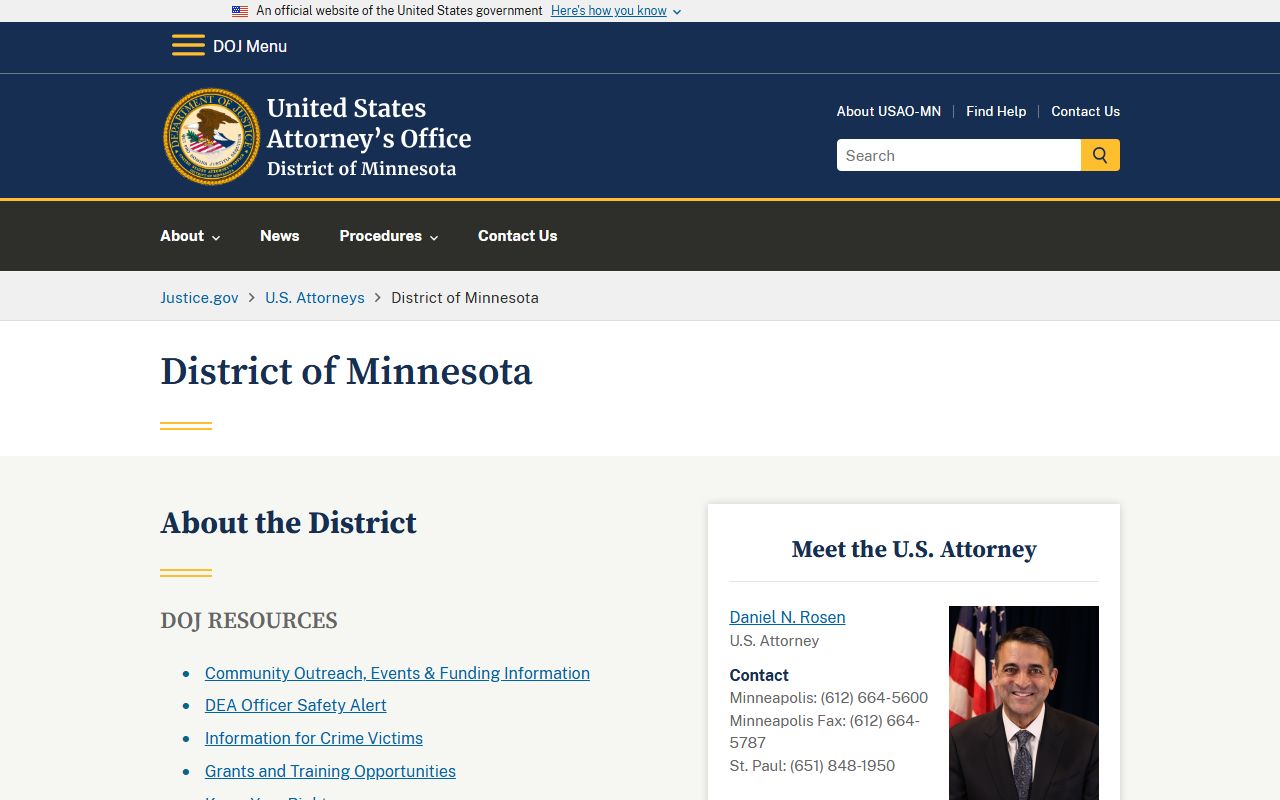
Use federal sources only when the case was prosecuted in federal court rather than McLeod County District Court.
McLeod County Criminal Case Flow
A criminal court record grows as the case moves through district court. The complaint and charge lines show the accusation. Arraignment or first appearance entries show early court events and conditions. Omnibus, pretrial, and motion entries show contested issues. A plea or trial entry shows how the case was resolved. Disposition and sentencing entries show the final outcome, penalties, probation, fines, restitution, or other court orders.
Case flow: Charges Filed › Arraignment › Pretrial / Motions › Plea or Trial › Disposition › Sentencing
| Stage | What Happens |
|---|---|
| Charges Filed | The complaint or charging document opens the criminal case and lists alleged offenses, levels, and statutes. |
| Arraignment / First Appearance | The court addresses rights, conditions, scheduling, and plea-related issues. |
| Rule 8 / Omnibus | Minnesota criminal pretrial stages can address probable cause, evidence, motions, and future hearings. |
| Pretrial / Motions | The parties file and argue motions, negotiate, or prepare for plea or trial. |
| Plea or Trial | The defendant may enter a plea, or the case may proceed to trial and verdict. |
| Disposition / Sentencing | The court records the outcome, sentence, probation terms, fines, restitution, or dismissal. |
The daily McLeod calendar sample included criminal hearing types such as arraignment, omnibus hearing, first appearance, Rule 8 hearing, sentencing, probation violation hearing, pre-trial, and status conference. Those entries help track movement, but the full criminal court record is needed to read the case outcome with care.
McLeod County Criminal Record Fields
McLeod County criminal court records use Minnesota district court case-number formats. A criminal case number can look like `43-CR-26-610`, where `43` is the McLeod County code, `CR` is the criminal category, and the remaining numbers identify year and sequence. Older warrant-related numbers may use legacy formats without the same hyphen pattern, so the case record and warrant list may not always display numbers in identical form.
| Field | What It Shows |
|---|---|
| Case Number | Minnesota district court identifier, such as `43-CR-YY-number` for McLeod criminal cases. |
| Defendant and Parties | The accused person, State of Minnesota, attorneys, and other public party roles. |
| Charges | Charge level, statute, description, filing status, and amendments where public. |
| Bail or Bond | Cash bail, bond, conditions, or related court orders when entered in the case. |
| Hearings | Dates, times, judicial officer, hearing type, courtroom, remote setting, and connection type. |
| Plea | The defendant's formal answer to a charge, such as guilty or not guilty. |
| Disposition | The outcome of the case or charge, including dismissal, conviction, acquittal, or other resolution. |
| Sentence | Jail, probation, fines, restitution, treatment, no-contact terms, or other penalties when imposed. |
| Probation Events | Probation violation allegations, review hearings, and supervision-related entries. |
| Warrants | Bench or arrest warrant entries tied to the criminal case when public. |
Remote redactions matter. Rule 8 limits remote disclosure of Social Security numbers, employer or taxpayer ID numbers, many addresses and phone numbers, financial account numbers, and identifying information for jurors, witnesses, and crime victims. Rule 11 requires restricted identifiers and confidential financial source documents to be kept out of public filings or submitted under confidential procedures.
Charges vs. Convictions
A charge is an accusation. A conviction is an outcome after a guilty plea, guilty verdict, or other qualifying court result. McLeod County criminal court records can show charges that were amended, reduced, dismissed, or resolved without conviction. The County Attorney criminal complaints page also states that filing charges is not evidence of guilt and defendants are presumed innocent unless and until proven guilty.
| Charge | Conviction | |
|---|---|---|
| Stage | Appears when the prosecution files or amends an alleged offense. | Appears after a plea, verdict, or court disposition that results in conviction. |
| Meaning | An allegation that a law was violated. | A court outcome that the offense was proved or admitted. |
| Record effect | May later be dismissed, reduced, amended, or superseded. | Can drive sentence, probation, fine, restitution, and collateral consequences. |
| Best source | Complaint, charge table, docket entries, or County Attorney complaints. | Disposition, sentencing order, register of actions, and certified court copy. |
The County Attorney criminal complaints document center contains complaint records for cases filed on or after January 1, 2025.
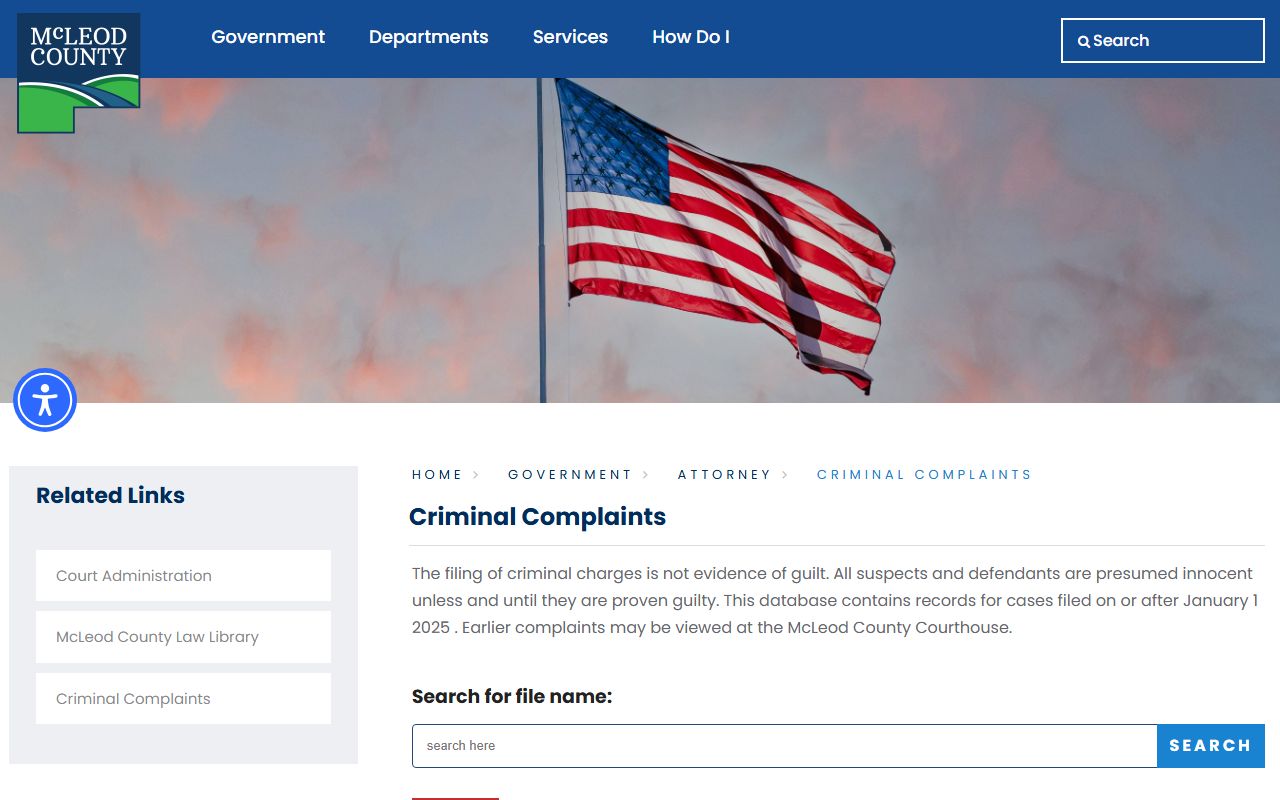
Older criminal complaints may be viewed at the courthouse, so the document center should not be treated as a complete historical complaint archive.
McLeod County Criminal Dispositions
Disposition means the result of a case or charge. In a McLeod County criminal court record, the disposition should be read at the charge level when possible because one case can contain more than one count. Some charges may be dismissed while another charge results in a plea or conviction. Sentencing entries can include jail, stayed sentence terms, probation, fines, restitution, treatment, testing, no-contact orders, or review hearings.
Probation is court-ordered supervision instead of, or after, confinement. A probation violation is an allegation that a defendant broke probation terms. The daily calendar sample included probation violation hearings, review hearings, sentencing, and status conferences, which means a criminal record can continue to grow after the first sentencing date. Court Services/Probation is a separate local office, but probation events can still appear inside the criminal court file.
Sealed McLeod County Criminal Records
Sealed and expunged criminal court records are not the same. A sealed record is not publicly accessible except by court order or authorized access. Expungement is the Minnesota court process that can seal or limit public access to a criminal record. MCRO may not show expunged cases, and the MCRO FAQ lists expungement as one reason a known case may be missing from online results.
| Sealed | Expunged | |
|---|---|---|
| Visibility | Not publicly accessible unless authorized by court order or rule. | Public access is limited according to the expungement order. |
| How it happens | By law, court rule, or specific court order. | Usually by petition under Minnesota expungement procedure. |
| MCRO result | May be hidden or limited. | May not appear in public online search results. |
| Agency access | Some authorized users may retain access. | Some agencies may retain access for authorized purposes. |
In McLeod County, a person seeking criminal expungement generally files the petition in McLeod County District Court for a McLeod criminal case. The McLeod fee schedule lists criminal expungement at $315. Petitioners identify each case, serve required agencies, and attend any hearing the court sets. Eligibility is fact-specific, so the record should not be described as eligible unless the court has granted relief.
Minnesota's expungement statute page provides the petition procedure for criminal expungement.
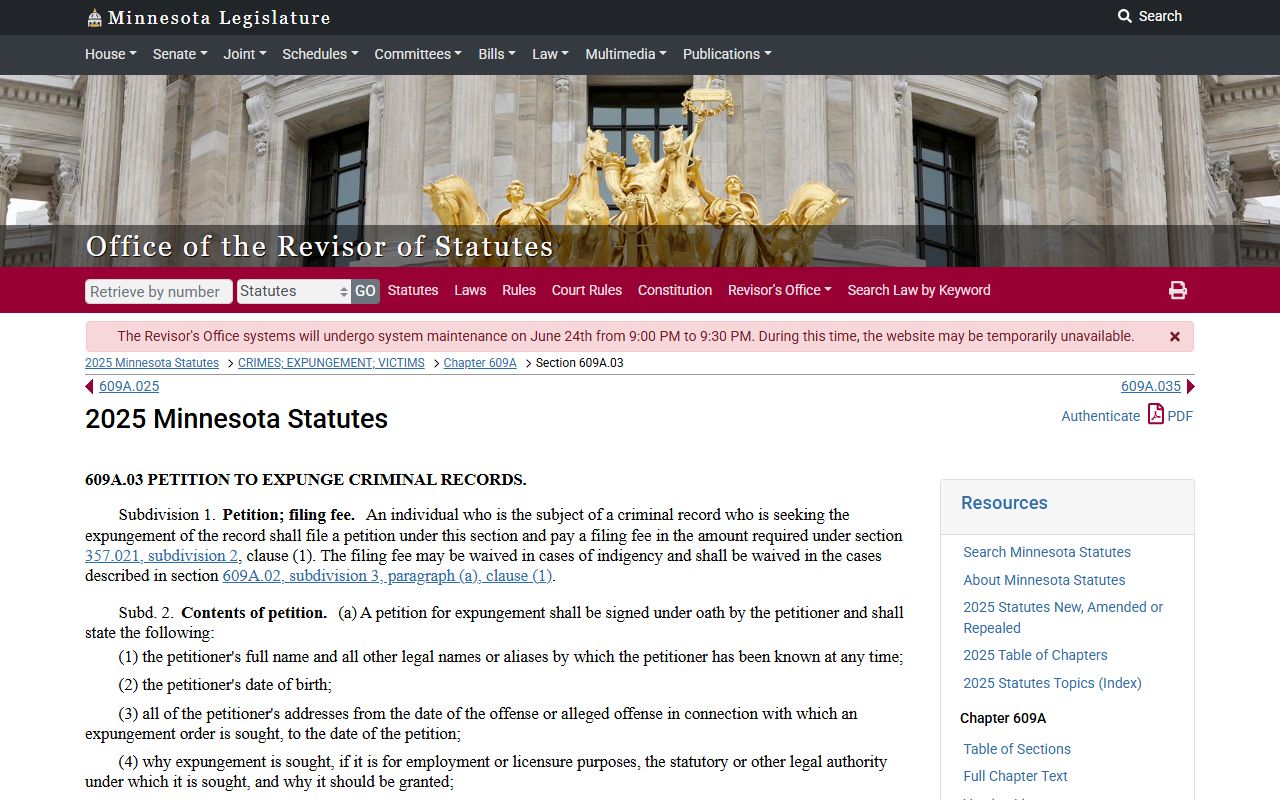
That procedure can affect whether a McLeod criminal court record remains visible in public search results.
Access McLeod County Criminal Records
Minnesota court records are generally open for inspection or copying under Minnesota Rules of Public Access Rule 2, unless a law, rule, or court order makes them inaccessible. Rule 4 lists case-record categories that are not accessible to the public, and Rule 8 explains remote access limits. Those limits matter for criminal records because public courthouse access can be broader than MCRO remote access.
Key Rules:
Rule 2 - Court records are generally open unless a rule, law, or order restricts them.
General Rule 11 - Restricted identifiers and confidential financial data must be kept out of public filings or filed confidentially.
Juvenile delinquency records have added limits under Minnesota law, and MCRO terms specifically say felony juvenile delinquency 16 case types are not available through MCRO. Adoption records and civil commitment documents are also restricted. Criminal records involving adult defendants are often public, but specific documents, identifiers, and victim, witness, or juror information can still be withheld.
Public Defender and Counsel
Criminal court records may show attorney names, but the court record is not the same as a public defender application. McLeod County is served through the First District public defender structure. The research lists Public Defender - First Judicial District, Chaska Office, at (952) 361-3810, 207 North Chestnut Street, Suite 201, Chaska, MN 55318, for court-appointed criminal and juvenile delinquency representation for qualifying low-income people.
The Minnesota Board of Public Defense office directory is the statewide channel for public defender office information.
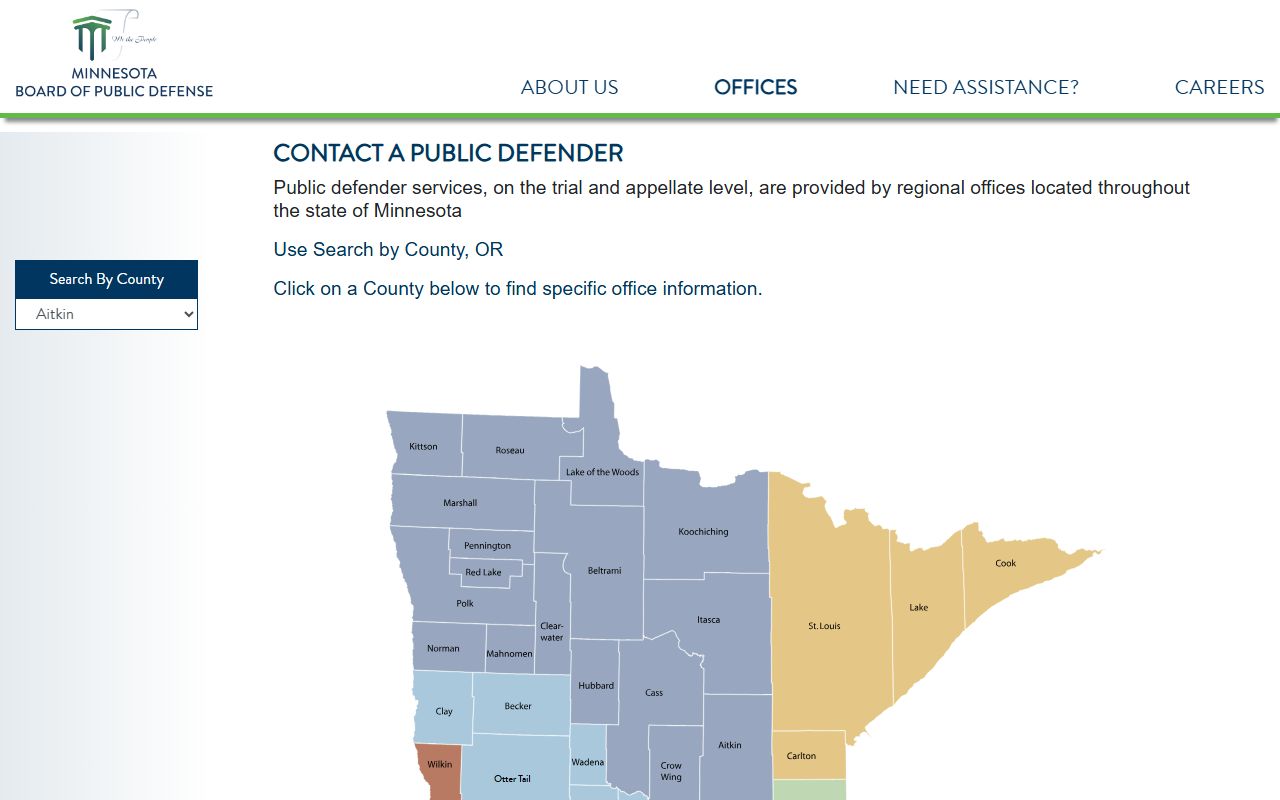
The public defender application process is separate from searching McLeod County criminal court records, though both may use the court file number.
Restricted McLeod County Criminal Records
Restricted McLeod County criminal records include juvenile matters, sealed or expunged cases, confidential identifiers, and information withheld by rule or court order. Pending criminal cases without conviction may be missing from MCRO defendant-name searches even when a case-number search is allowed. This is a search limit, not proof that no case exists. When a record is missing, use the case number if known or contact McLeod Court Administration.
Warrant and jail data can overlap with a criminal case, but they are not the same record. The Sheriff's Office active warrant list and jail roster may show warrant, booking, or custody status. The criminal court record shows the case history, hearings, pleas, orders, disposition, and sentence. For active warrant checks, use the sheriff warrant channel and Court Administration for court-issued bench warrant context.
Important: MCRO records are unofficial, and certified criminal court records must be requested through Court Administration.