
McLeod County Arrest Records and Court Charges
Arrest records in McLeod County are law-enforcement records tied to the arrest and booking event. The Sheriff's Office is the jail custodian, and the public jail roster can show a booking photo, MNI, name, sex, age, booking number, intake date, charge lines, bail or bond fields, and release or hold notes. That roster is a custody snapshot. It does not replace the court record, and it does not prove guilt. The roster also leaves out some details a reader might expect, such as full physical descriptors, pod location, full court date, arresting officer, and sentence documents.
The court charge record begins when a charging authority files a complaint or other charging document in McLeod County District Court. Minnesota counties use a County Attorney, not a District Attorney. McLeod County Attorney Ryan Hansch's office prosecutes criminal actions for the State of Minnesota and represents the county in civil and juvenile matters. Once charges are filed, the record can move through MCRO, the court calendar, bail orders, hearings, pleas, disposition, and sentencing. The full case history belongs in McLeod County criminal court records; custody and booking detail belongs with the jail roster.
The McLeod County Sheriff's Office page identifies Sheriff Tim Langenfeld and the office that has charge and custody of the county jail.
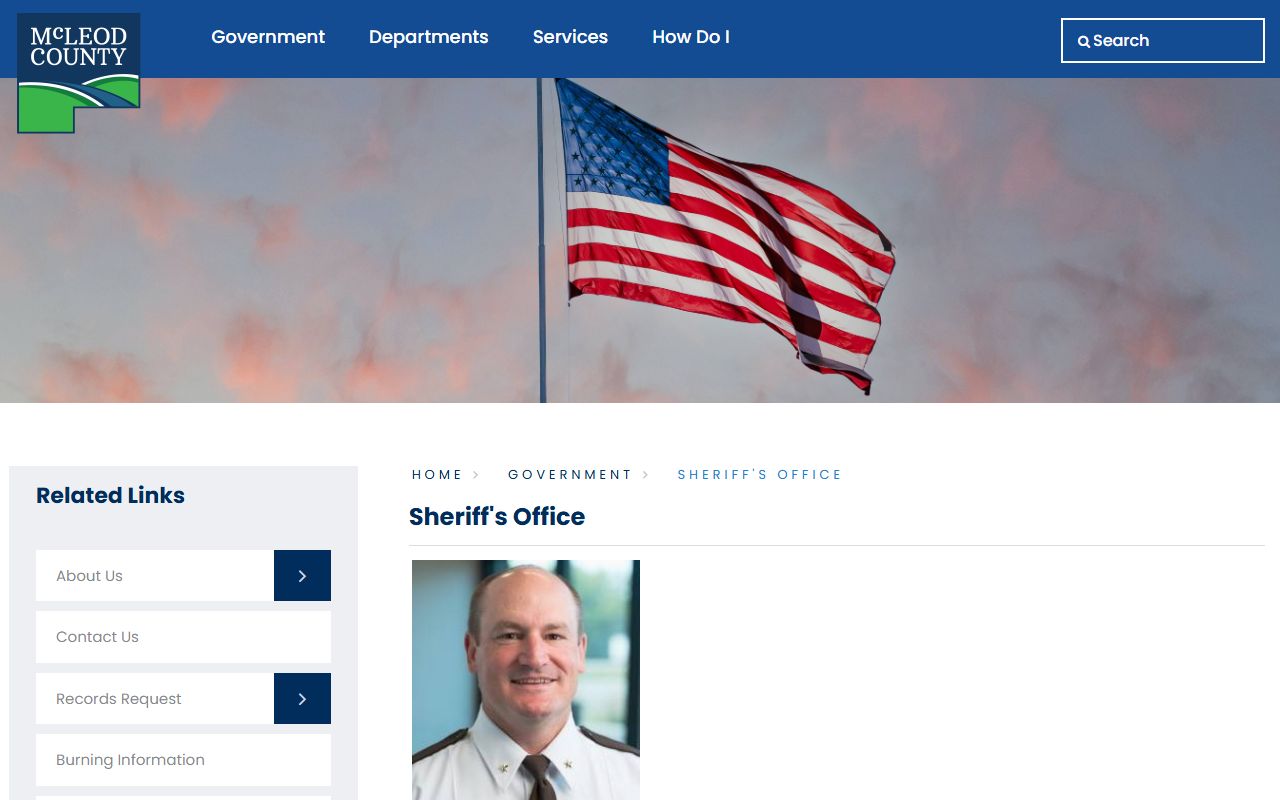
This sheriff source helps separate the law-enforcement side of an arrest from the later court charge record.
Search McLeod County Arrest Records and Charges
Use more than one source when checking McLeod County arrest records and court charges after arrest. MCRO is the statewide court portal for District Court case records. It can show criminal case numbers, filing dates, charge entries, hearings, parties, dispositions, and public documents where remote access is allowed. The jail roster shows in-custody booking data and charge lines. The County Attorney criminal complaints document center adds another local channel for complaint documents filed on or after January 1, 2025. Older criminal complaints may be viewed at the courthouse.
- Start with MCRO Case Search and accept the portal terms.
- Search by case number when known. For names, use exact spelling first, then try the wildcard or Sounds Like option if needed.
- Select McLeod in Court Locations to narrow statewide results to McLeod County District Court.
- Open the case detail and review charge descriptions, statutes, offense levels, hearings, docket entries, disposition, and public documents.
- Check the McLeod County Attorney criminal complaints page for complaint documents in cases filed on or after January 1, 2025.
Pending criminal, traffic, and petty misdemeanor cases without conviction may not return by defendant-name search in MCRO, even when a case exists. They may still return by case number, citation number, attorney, or bar number. If the person is currently in custody, the McLeod County inmate roster can show charge lines before the court record is easy to locate by name.
The direct McLeod custody list is a county source for current booking and charge-line information.
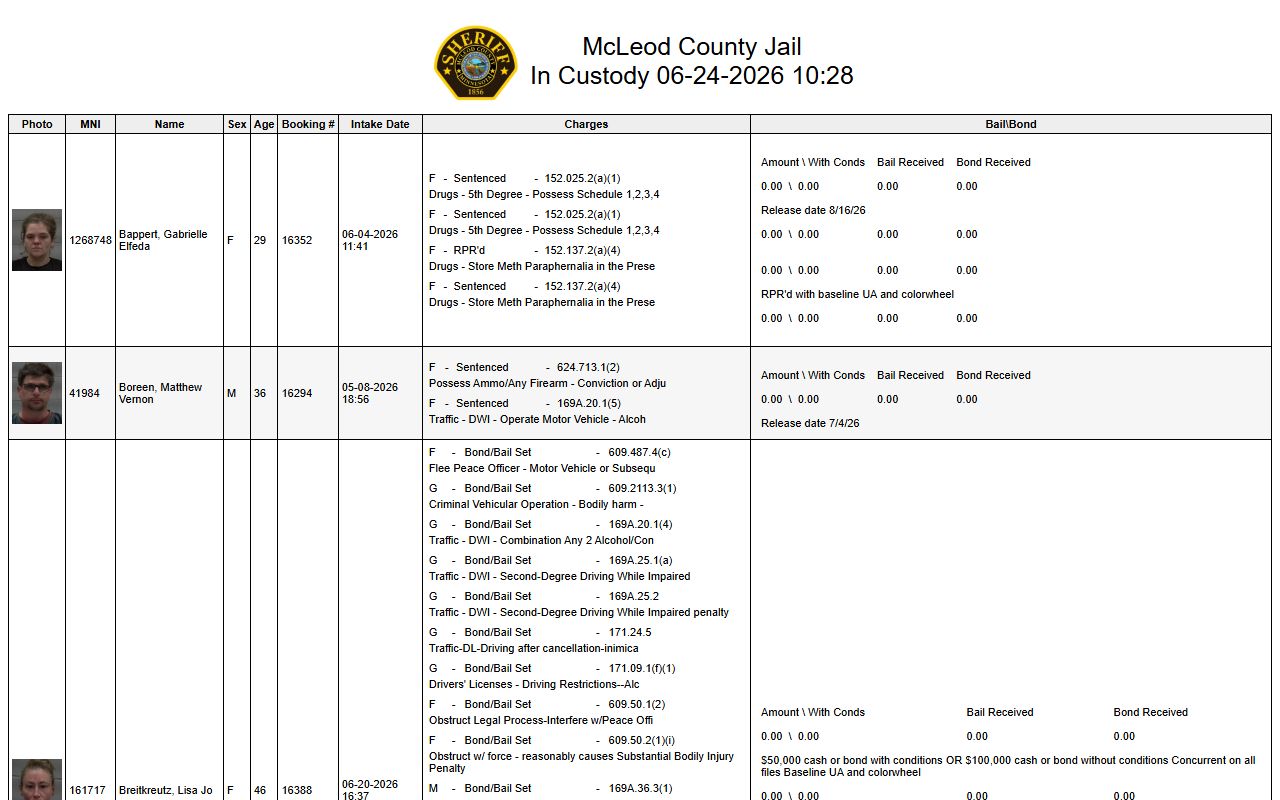
Those charge lines can be useful, but the court file should still be checked for the formal charging document and later case status.
McLeod County Charging Documents
For McLeod County court charges after arrest, the key local document is the criminal complaint. The County Attorney page states that the filing of charges is not evidence of guilt and that defendants are presumed innocent unless and until proven guilty. Complaint records in the county document center begin with cases filed on or after January 1, 2025. Earlier complaint files are courthouse-view records. MCRO may also show case-level charge information, but the complaint is the document that lays out the accusation and supporting probable-cause statement where it is public.
| Document | Who Files It | How It Fits McLeod Records |
|---|---|---|
| Complaint | Prosecutor, based on law-enforcement reports and probable cause | The County Attorney complaint document center is the local source for newer filed complaints. |
| Information | Prosecutor | Used in some criminal practice to state formal charges after earlier proceedings or waiver of indictment. |
| Indictment | Grand jury | Used for select serious matters; it is less common than a county criminal complaint. |
A charge document is not the same as a conviction record. It states what the State alleges. Later court entries show whether each count was amended, dismissed, resolved by plea, tried, sentenced, or otherwise disposed.
McLeod County Charge Status
A McLeod County charge record can change as the case moves through arraignment, Rule 8 hearing, omnibus hearing, plea talks, trial, sentencing, review hearing, or probation violation proceedings. One arrest can produce several counts. Each count can have a different level, statute, bail condition, plea, disposition, or sentence. MCRO and court calendar entries should be read by charge, not just by case number, because a dismissed count and a convicted count can sit in the same criminal file.
| Status | What It Means |
|---|---|
| Pending | The accusation is open and has not reached final disposition. Pending criminal name searches can be limited in MCRO. |
| Amended or reduced | The charge text, statute, or offense level changed after filing, often through motion practice or plea negotiations. |
| Dismissed | The court record shows the count did not result in a conviction on that charge. |
| Convicted | A guilty plea, verdict, or other qualifying outcome produced a conviction entry and sentence or penalty. |
| Warrant or hold | The charge line or case may be tied to a warrant, court order hold, bail setting, or release to another authority. |
Note: The jail roster uses practical labels such as Bond/Bail Set, Court Order Hold, RPR'd, Release to Another Authority, and warrant notes.
Charges vs Convictions
Being charged is not the same as being convicted. The County Attorney's own criminal complaint page warns that filing charges is not evidence of guilt. MCRO case records, jail roster charge lines, and complaint documents can all show accusations before any plea, verdict, or sentence. A background review should distinguish the charge filed, the count status, and the final disposition.
| Charge | Conviction | |
|---|---|---|
| Meaning | An allegation that a person committed a specific offense. | A guilty plea, verdict, or other conviction entry. |
| Where seen | Complaint, MCRO charge list, jail charge line, warrant entry. | Disposition, sentencing entry, payment or penalty record. |
| What to verify | Statute, level, filed date, bail, and current count status. | Exact count, sentence, probation, fines, and later expungement or sealing. |
Sealed and Expunged Charges
Minnesota court rules restrict some case records and remote access. Juvenile records, adoption files, civil commitment documents, restricted identifiers, and sealed or expunged criminal records may be unavailable online or unavailable to the public. A McLeod County criminal expungement is filed in District Court for the connected case. The research file lists a McLeod criminal expungement filing fee of $315, but eligibility depends on statute, case outcome, service rules, and a court order.
| Sealed | Expunged | |
|---|---|---|
| Public view | Public access is limited by rule, order, or case type. | Public access is limited according to the expungement order. |
| Online search | The case or document may not appear in MCRO. | MCRO may not return the case after the order is processed. |
| Authority | Minnesota Rules of Public Access and court orders. | Minn. Stat. 609A.03 and the court's order. |
McLeod Charge Codes and Bail
McLeod court and jail records use Minnesota terms for offense levels. The research identifies felony, gross misdemeanor, misdemeanor, and petty misdemeanor records, and the jail roster showed level and status labels such as F - Sentenced, G - Bond/Bail Set, M - Court Order Hold, and F - Warrant. A statute number links the charge to the Minnesota law section alleged. Bail or bond fields are separate from guilt. They show release conditions or money set to secure court appearance.
Warrant records can also carry charge context. The active warrant list includes warrant number, name, date of birth, warrant date, bond or bail amount, offense level, and description. Some descriptions are failure-to-appear or probation-violation entries. Newly issued warrants can take several days to enter the sheriff warrant system, so court records and dispatch may be needed for current status.
State and Federal Charge Channels
MCRO is the Minnesota District Court channel for McLeod County case records, but it is not a certified criminal-history background check. The MCRO terms identify the Bureau of Criminal Apprehension as the background-check channel for Minnesota criminal-history records. Federal cases are separate from McLeod County District Court. Federal criminal dockets are handled through PACER and the federal District of Minnesota, not MCRO.
Federal sources are useful only when the prosecution is federal; McLeod County arrest and charge records stay with county, state, and District Court channels.
Background Check Considerations
Casual record lookup is different from a consumer background check. A court or jail source may show an arrest, charge, bail status, or warrant entry without showing the final outcome. For employment, housing, credit, insurance, or other regulated screening, the Fair Credit Reporting Act and state law may require procedures that are not met by browsing MCRO, a warrant list, or a jail roster.
Important: Do not treat an arrest, jail charge line, or complaint as proof that a person was convicted.
Restricted McLeod County Charge Records
If a charge, booking detail, or sheriff report is not online, use the official fallback for the record type. Court copies and certified documents go through McLeod Court Administration. Arrest, booking, incident, or sheriff-held law-enforcement data can be requested in writing from the Sheriff's Office. The sheriff form says identifying information cannot be required, but a way to contact the requester is needed if staff must ask follow-up questions or notify when data is ready.
The Sheriff's online public data request form asks for the date of request, the access type, a specific description of the data, and optional name, address, phone, and email fields.
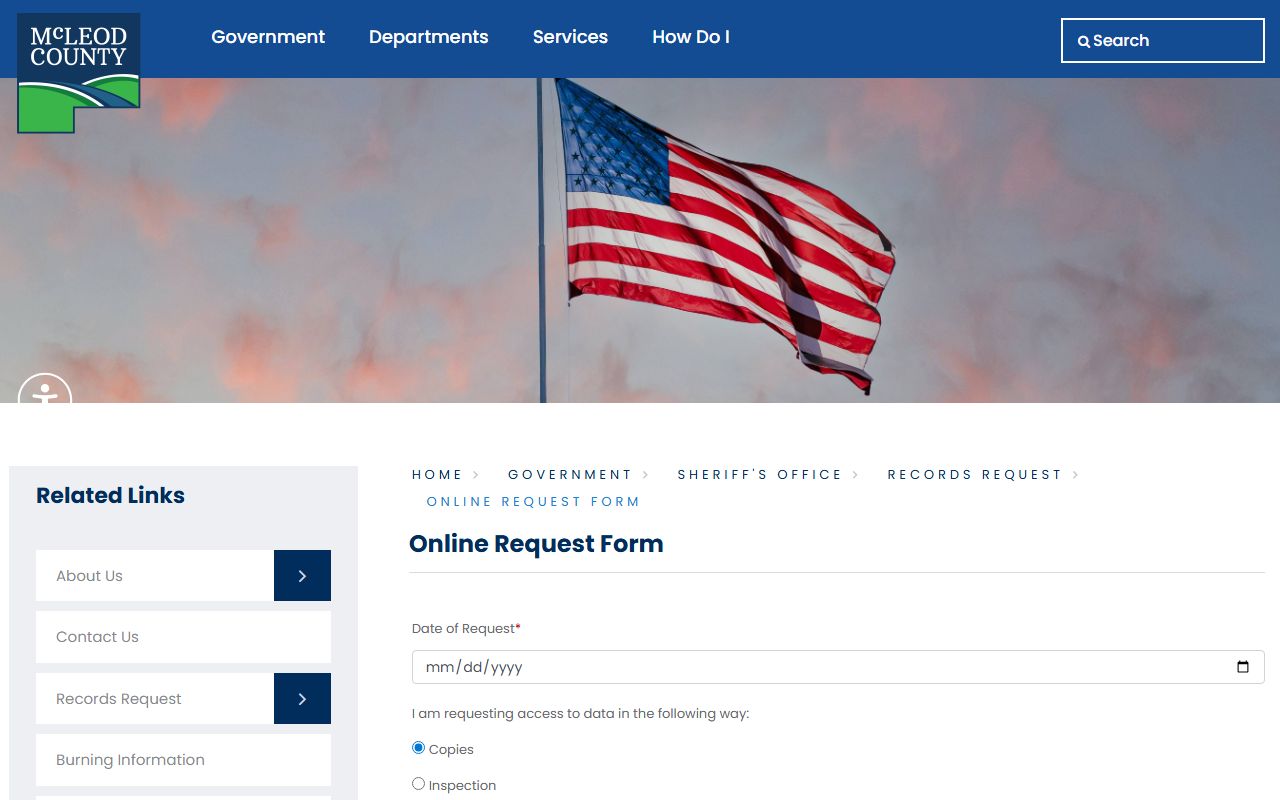
This written request path is the practical fallback when the arrest record is sheriff data rather than a District Court document.